


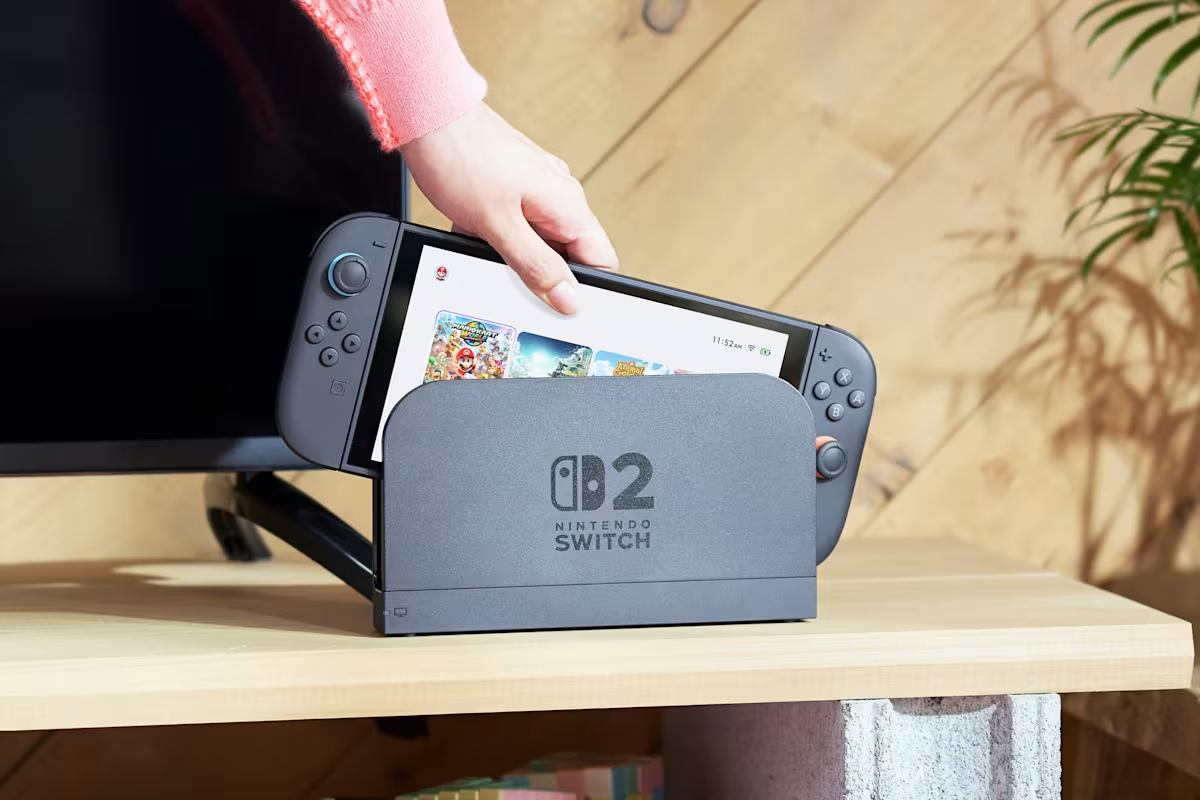
The Nintendo Switch 2 launched on June 5, 2025, and after more than a month on the market, we’ve been able to test it thoroughly. While we found tangible improvements over the original Switch, we also noticed some decisions that continue to raise questions.
With a larger screen, smoother games, and new features for playing with friends, the Switch 2 aims to refine the hybrid experience that defined its predecessor. Here’s what we liked, what we didn’t, and what we learned after a couple weeks of use.
Hardware Evolution: Bigger, More Powerful, Better Image
One of the most noticeable changes is the 7.9-inch LCD screen, which now has 1080p resolution, HDR10 support, and can display up to 120 frames per second. When switching from the original Switch to this one, the fluidity is evident: everything looks sharper and smoother. However, if you have a Switch OLED, the colors and blacks might seem somewhat washed out in comparison.
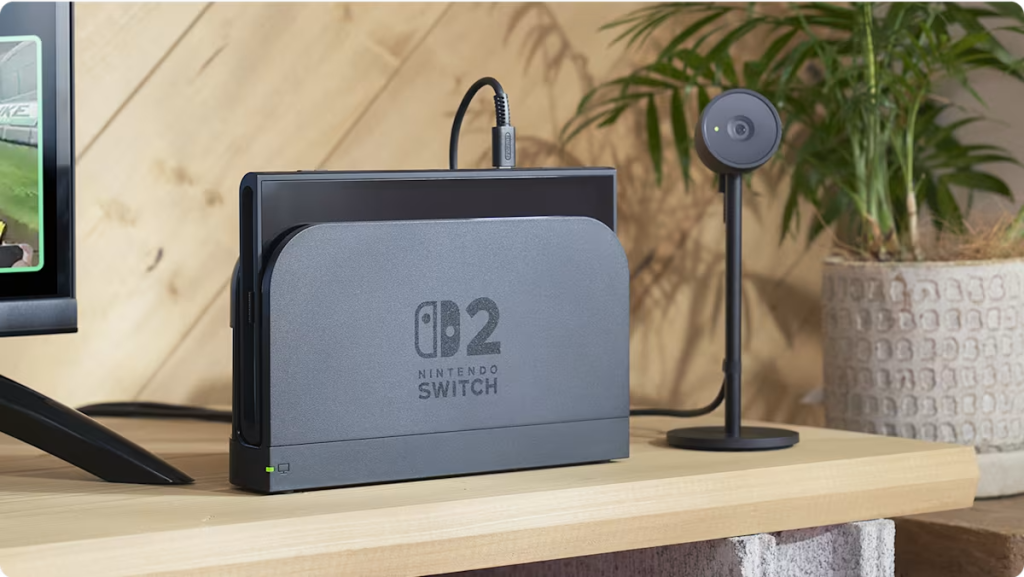
Connected to the TV, we achieved stable 4K output at 60 fps, and also reached 120 fps by lowering the resolution. That said, we noticed HDR isn’t always available, probably due to dock limitations.
As for the Joy-Con 2, they pleasantly surprised us: the magnetic connection is more comfortable and the side buttons now actually feel good. Mouse mode works better than we expected, though we haven’t used it much in actual games yet.
We’re still concerned that the sticks don’t use Hall Effect sensors, and in some cases we already noticed some weird resistance in movements.
Pros
Smoother screen with HDR and 120Hz
4K output in TV mode
More ergonomic Joy-Con with practical magnetic system
Cons
LCD panel loses contrast in dark environments
Sticks could still be vulnerable to drift
Improved Performance, Fair Battery
The console is much faster: navigating menus, opening games, or browsing the eShop is now a fluid experience. We tested titles like Resident Evil 5 and Bomb Rush Cyberfunk, and both run at constant 60 fps without needing patches.
The 256 GB internal memory and microSD Express support make everything load faster. But this has a catch: our old microSD cards no longer work, forcing us to invest in new ones.
Battery remains a weak point. In demanding games we didn’t get past three hours. In lighter sessions, we reached five or six, but it’s still not ideal if you play away from home.
Pros
Much faster menus and game loading
Real performance improvement in older games
Cons
Limited battery life
Need new microSD cards
Compatibility, Improvements, and Business Model
We’re glad to know the console is compatible with our digital and physical Switch games. But some improvements only unlock by paying an extra price:
- Zelda: BOTW & TOTK — Now support 4K/60fps, HDR, and a new Hyrule Notes companion app.
- Kirby and the Forgotten Land — Adds a new story chapter alongside upgraded visuals.
- Metroid Prime 4 Beyond — Offers performance and quality modes, plus enhanced motion aiming.
- Mario Party Chambor — Integrates camera support and refined Joy-Con motion input.
What we didn’t like was paying for features that could come standard, like a second save file. There we felt Nintendo is pushing too hard.
Pros
Backward compatibility with previous games
Good improvements for key games
Cons
Updates have additional cost
Some improvements are too basic to charge for
GameChat and GameShare: Playing with Friends, Better
One of the most interesting additions is GameChat, a system that lets you make voice and video calls while playing. It’s activated with the new “C button” on the Joy-Con 2, works with USB-C cameras, and has noise cancellation for better audio. Best part is it’ll be free until March 2026 if you have Nintendo Switch Online.
We tested GameChat and liked it: the integrated microphone sounds clear, the C button is accessible, and the system works without needing external apps. We made video calls while playing Mario Kart World and the experience was surprisingly good.
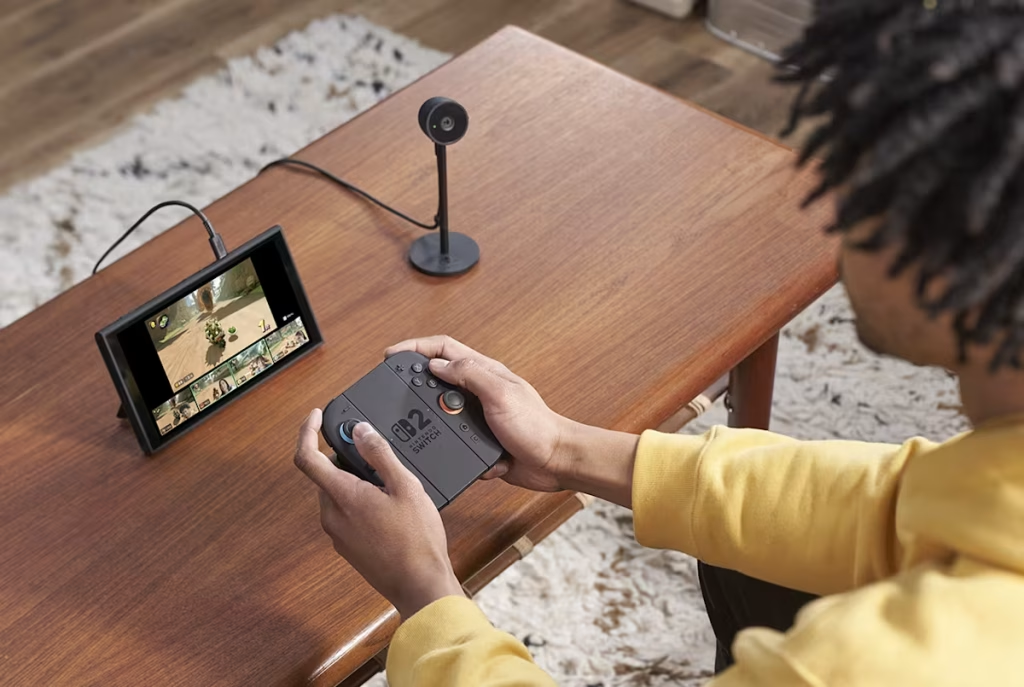
Another cool feature is GameShare, which allows up to four consoles (both Switch 1 and Switch 2) to play together locally using just one copy of the game. You no longer have to buy multiple copies to enjoy with friends or family.
This functionality also proved useful for us: we could play local multiplayer with other consoles without having to buy additional game copies. Perfect for gatherings or families with multiple Switches.
Pros
Video calls and voice without needing external apps
Local multiplayer with just one game copy
Cons
Some features require accessories like the camera
GameChat will be paid from April 2026
Games Coming with the Console and What’s Coming Later
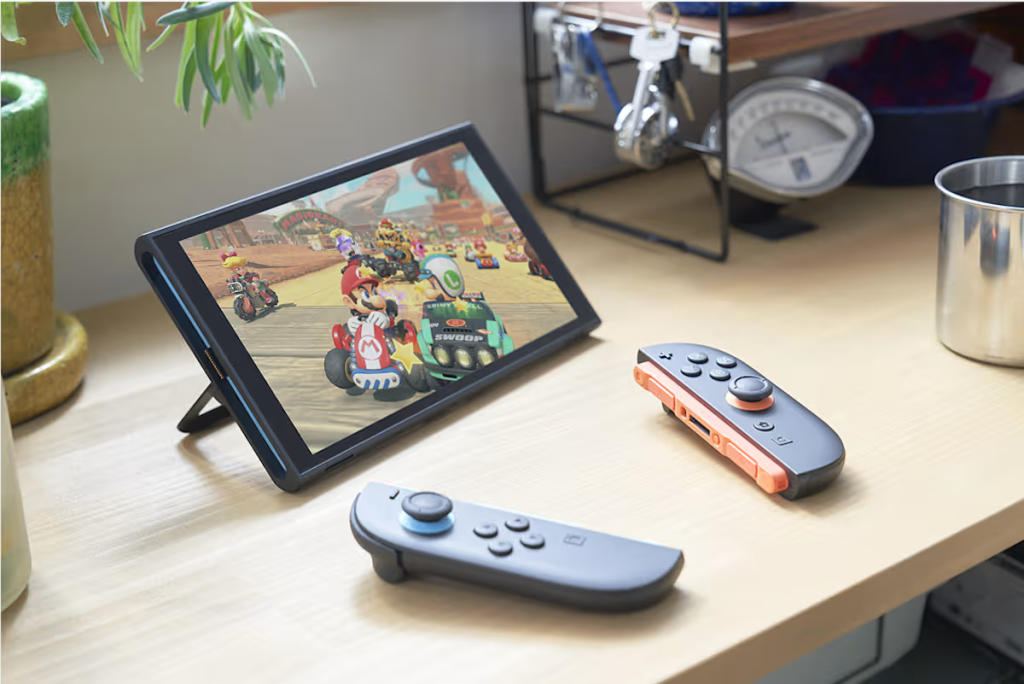
Mario Kart World came with our console and, though we had doubts at first, it ended up convincing us. The 24-player races and enormous tracks are chaotic but fun. The new visual style, mixing retro with modern, looks great on the new screen.
- Donkey Kong Bananza (released July 7, 2025): A 3D platformer with open world, similar to Mario Odyssey
- Kirby Air Riders: The sequel to the GameCube classic, with updated physics and graphics, directed by legendary Masahiro Sakurai
- Metroid Prime 4 Beyond: Designed specifically to showcase the Switch 2’s power
- Hyrule Warriors: Age of Imprisonment: A new massive action adventure in the Zelda universe
- Delta Rune Chapters 3 & 4: The continuation of Toby Fox’s popular indie RPG
- Cyberpunk 2077 Ultimate Edition: An optimized version for Switch 2
- Silksong: The long-awaited sequel to Hollow Knight, confirmed for 2025
Nintendo Switch Online will also expand its catalog with GameCube classics like Wind Waker, Soul Calibur II, and F-Zero GX, all with online play.
With this game lineup, it’s clear Nintendo is betting big on creating experiences that truly take advantage of the new console’s potential.
Is the Switch 2 Worth It?
It’s hard to give a single answer. If you’ve never had a Switch, this is clearly the best way to start. If you have a basic Switch, the jump is felt in every aspect. But if you already have an OLED, the change is more debatable.
The Nintendo Switch 2 left us with a good overall impression. It doesn’t revolutionize, but it polishes and improves almost everything. It feels like the console the original Switch wanted to be, and finally achieved it.
That said, we also noticed a more demanding Nintendo on the wallet: high prices, almost mandatory subscriptions, and features that used to be free now cost money. We’ll keep following upcoming announcements closely. There’s still a lot to see.
Technical Specifications
| Feature | Specification |
| Display | 7.9-inch LCD, 1080p, 120Hz, HDR10 support |
| Docked Output | Up to 4K at 60fps, or 1440p/1080p at 120Hz |
| Internal Storage | 256 GB UFS |
| Expandable Storage | microSD Express only (no legacy SD support) |
| Controllers | Joy-Con 2 (magnetic, with optical sensor) |
| Audio | Enhanced stereo speakers, 3D audio via headphones |
| Microphone | Built-in with noise cancellation |
| Ports | 2x USB-C, 1x 3.5mm combo jack |
| Battery Life | Approx. 2–6.5 hours |
| Game Media | New red game cards, same form factor |
| Online Features | GameChat, GameShare, NSO Expansion Pack |
| Accessories (optional) | Switch 2 Camera, Switch 2 Pro Controller |
| Launch Price | $450 base / $500 bundle with Mario Kart World |
Alternatives
- Steam Deck — A powerful handheld PC with access to the Steam library, great for players looking for more raw performance and customization.
- Nintendo Switch OLED — Still an excellent option for those who want a more affordable entry into the Nintendo ecosystem with a vibrant 7-inch OLED screen.
- ROG Ally — ASUS’s Windows-based gaming handheld that combines a high-refresh-rate screen with full PC gaming capabilities on the go.
