


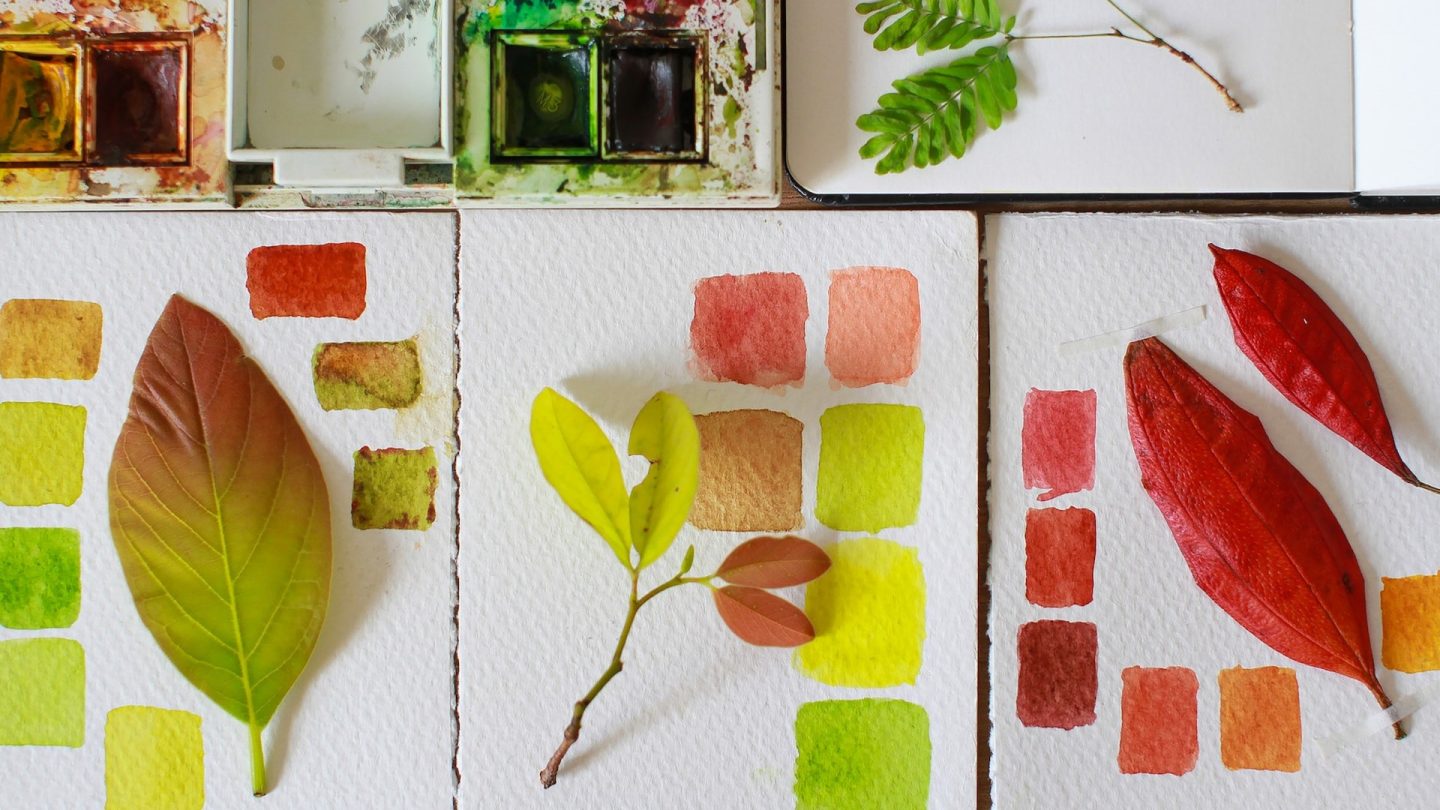
Watercolor paper can affect a painting almost as much as the paint itself. Fiber, surface and weight determine how quickly water moves, whether washes stay soft or develop hard edges, and how much lifting, glazing and correction the sheet can handle before the surface starts to give way.
In this updated guide, we’ve selected five watercolor papers for different needs. There are professional 100% cotton papers for demanding wet techniques and layering, along with more affordable cellulose options that make more sense for beginners and regular practice.
Tested and written by Amanda Westberg
Translated by Lucía Bima
Arches Aquarelle Cold Press 300 gsm – Best overall
Material: 100% cotton Surface: Cold press

Arches Aquarelle remains our first choice because it works well across a wide range of watercolor techniques. The mould-made, 100% cotton paper absorbs enough water for soft wet-on-wet transitions while still giving us enough control for glazing, smaller shapes and more precise brushwork. The cold-pressed grain is noticeable without being so rough that details become difficult.
Its biggest strength appears when the paper gets properly wet. Washes have room to move, pigments settle naturally into the texture and the surface tolerates repeated work better than most cellulose papers. Arches also performs particularly well when creating blooms and organic watercolor effects, although its high absorbency can make colors dry slightly lighter than they first appear.
The downside is that the paper can sometimes feel almost too absorbent when working with a relatively dry brush. Completely dried pigment isn’t always easy to lift either. If we had to choose one dependable 300 gsm paper for everything from landscapes to layered illustration, however, Arches would still be it.
Pros
Excellent for wet-on-wet and layered techniques
Strong 100% cotton surface
Versatile cold-pressed texture
Handles repeated work well
Cons
More expensive than practice paper
Can absorb moisture quickly with a drier brush
Dried pigment isn’t always easy to lift completely
Fabriano Artistico Cold Press 300 gsm – Best for detail and controlled washes

Material: 100% cotton Surface: Cold press
Fabriano Artistico feels slightly more controlled than Arches, which makes it our favorite when a painting combines washes with defined edges, pencil sketches or smaller details. Its cold-pressed surface has an even, relatively fine texture, so pigment still has enough tooth to show visible granulation without making precision work unnecessarily difficult.
The paper is mould-made from 100% cotton, and the Artistico range is available in both 300 and 640 gsm. Fabriano has also strengthened the surface sizing, which contributes to how well the paper copes with repeated glazing and manipulation. Over longer use, the 300 gsm version also holds up well to repeated erasing and layering while keeping edges relatively clean.
We’d choose it over Arches for botanical subjects, architecture and illustration where precise shapes matter. For very loose, heavily saturated washes, however, Arches or Saunders Waterford can feel more natural.
Pros
Fine and consistent cold-press texture
Very good for glazing and controlled edges
Handles pencil and erasing well
100% cotton
Cons
Sits in the premium price range
Feels less absorbent than papers designed for very wet techniques
If watercolor is only one part of your creative workflow, you can also read our guide to the best drawing tablets for digital illustration and drawing.
Saunders Waterford Cold Press 300 gsm – Best for expressive washes

Material: 100% cotton Surface: Cold press
Saunders Waterford has a noticeably more absorbent character than Fabriano Artistico. Water moves quickly into the cotton surface, and that’s exactly what makes the paper so enjoyable for loose landscapes, skies, gradients and paintings where large, soft transitions matter more than tiny controlled details.
The cold-pressed version has a noticeable but not extreme texture. Washes flow nicely across the surface, and the paper handles glazing without breaking down quickly. If a block becomes very heavily saturated, the sheet can rise slightly while wet before settling again as it dries.
That high absorbency does require some adjustment. Smaller brushes lose moisture faster, and sharp edges take more effort than on Fabriano. The paper isn’t completely immune to deformation either if you use exceptionally large amounts of water.
Pros
Excellent for large washes
Produces beautiful, soft transitions
Strong 100% cotton construction
Good surface for glazing
Cons
Can feel too absorbent for very small details
Heavy saturation can still make the paper warp
Requires more control over how much water is in the brush
Canson Montval 300 gsm – Best for beginners
Material: Cellulose Surface: Cold press

Canson Montval doesn’t try to behave exactly like professional cotton paper, and that’s one of the reasons we like it for beginners. You get enough weight to practice proper washes without every failed attempt feeling like you’ve wasted an expensive sheet.
Its most useful characteristic is how forgiving the surface is when something goes wrong. Montval is designed so watercolor can be lifted and corrected with water, a brush or a sponge before the area is painted again. The range is available in 300 gsm and several different formats, making it practical for everything from exercises to more developed studies.
That same easy lifting becomes less desirable once you start building more complex paintings with multiple glazes. If you go back over the same area several times, previous layers can be disturbed more easily than on good cotton paper. For practicing water control, gradients and color mixing, however, the compromise makes plenty of sense.
Pros
Easy to correct and lift color
300 gsm works well for regular watercolor practice
Available in many formats
Good choice for learning watercolor
Cons
Previous layers can reactivate relatively easily
Less suitable for demanding repeated glazing
Doesn’t behave like professional cotton paper
Winsor & Newton Watercolour Pad 300 gsm – Best for everyday painting

Material: Watercolor paper Surface: Cold press
Winsor & Newton’s standard Watercolour Pad sits in a useful middle ground between inexpensive sketch paper and professional cotton sheets. Its 300 gsm cold-pressed surface has enough texture to show typical watercolor effects without forcing you to adapt to an especially rough or highly absorbent paper.
It works well for straightforward washes, color studies, sketches and moderate layering. The 300 gsm weight helps the paper cope with saturation without becoming excessively wavy, and the range is available in several sizes. That makes it practical if you paint regularly and want predictable paper without using a premium cotton block every time.
Its limitations become more obvious as you continue adding water and layers. More experienced watercolorists who regularly glaze, scrub or rework the same area several times will get more from Arches, Fabriano or Saunders Waterford. For everyday painting and practice, though, it’s still a balanced option.
Pros
Versatile medium-grain surface
300 gsm weight
Available in several sizes
Good for general watercolor practice
Cons
Handles demanding repeated work less effectively than cotton paper
Experienced painters may outgrow it
Not our first choice for very wet multilayer techniques
Cotton or cellulose – Which watercolor paper should you choose?
For finished paintings and techniques that use a lot of water, we generally prefer 100% cotton. Cotton fibers tend to tolerate repeated wetting and manipulation better, while moisture stays workable for longer. That makes papers such as Arches, Fabriano Artistico and Saunders Waterford easier to use for glazing and wet-on-wet work.
Cellulose doesn’t automatically mean poor quality. Canson Montval and Winsor & Newton make much more sense if you’re practicing regularly, experimenting or simply don’t need the extra surface strength of cotton. Beginners may actually get more value from using plenty of decent cellulose paper than from being afraid to waste an expensive cotton sheet.
If you also work with ink or mixed media, see our guide to the best illustration markers for options that pair well with sketching and detailed artwork.
Is 300 gsm enough for watercolor?
For most watercolor painting, 300 gsm or around 140 lb is the weight we’d choose first. It can handle considerably more water than thin sketch paper and generally requires less preparation, while remaining much more practical than very heavy professional sheets.
Paper weight shouldn’t be confused with overall quality, however. Two 300 gsm papers can behave very differently depending on their fibers and sizing. A 300 gsm cotton paper such as Arches or Fabriano Artistico will normally tolerate repeated wet work better than a cellulose sheet of exactly the same weight.
Heavier options such as 640 gsm are useful if your technique involves extremely large washes or if you want to minimize warping. Fabriano Artistico, for example, is available in both 300 and 640 gsm.
Hot press, cold press or rough – What’s the difference?
- Cold press is our default recommendation for most watercolor painters. The surface has a moderate texture that creates visible grain and granulation without making precision work especially difficult. All five main recommendations in this guide are cold pressed for that reason.
- Hot press is noticeably smoother. It works particularly well for illustration, botanical subjects, line-and-wash work and other styles where clean edges and small details matter.
- Rough has the strongest texture. Pigment settles more visibly into the irregularities of the paper, creating stronger granulation and broken brush effects. We like it for expressive landscapes and loose painting, but it’s less practical when a subject requires very small details.
Which watercolor paper offers the best value?
Canson Montval offers the best value for beginners in our selection. Its surface is forgiving enough for corrections, the 300 gsm version can handle proper watercolor practice and you don’t need to treat every sheet like a finished artwork.
Once you start painting regularly, cotton becomes easier to justify. Arches costs more but gives you a surface that works across many different techniques, while Fabriano Artistico makes particular sense if controlled brushwork and glazing are important. Saunders Waterford is the more specialized option for painters who use plenty of water.
We wouldn’t choose solely according to price or paper weight. A less expensive sheet that suits your technique is more useful than premium cotton paper whose absorbency or texture constantly works against the way you paint.
| Watercolor paper | Material | Weight | Surface | Best for | Rating |
|---|---|---|---|---|---|
| Arches Aquarelle | 100% cotton | 300 gsm | Cold press | Best overall | 4.8/5 |
| Fabriano Artistico | 100% cotton | 300 gsm | Cold press | Detail and controlled washes | 4.7/5 |
| Saunders Waterford | 100% cotton | 300 gsm | Cold press | Wet techniques and loose washes | 4.6/5 |
| Canson Montval | Cellulose | 300 gsm | Cold press | Beginners | 4.4/5 |
| Winsor & Newton Watercolour Pad | Cellulose-based | 300 gsm | Cold press | Everyday painting | 4.3/5 |
Best watercolor paper 2026 – Our verdict
If we could keep only one watercolor paper, Arches Aquarelle Cold Press 300 gsm would still be our first choice. It gives washes enough time to move, holds up well as a painting becomes more complex and its cold-pressed texture works across a wide range of subjects without pushing you toward one particular technique.
Fabriano Artistico is the better choice when precision and layering matter most, while Saunders Waterford is particularly well suited to loose painting with plenty of water. Beginners don’t need to start with any of those, though. Canson Montval provides a much more forgiving starting point, while the standard Winsor & Newton Watercolour Pad remains a solid option for everyday painting and practice.
