


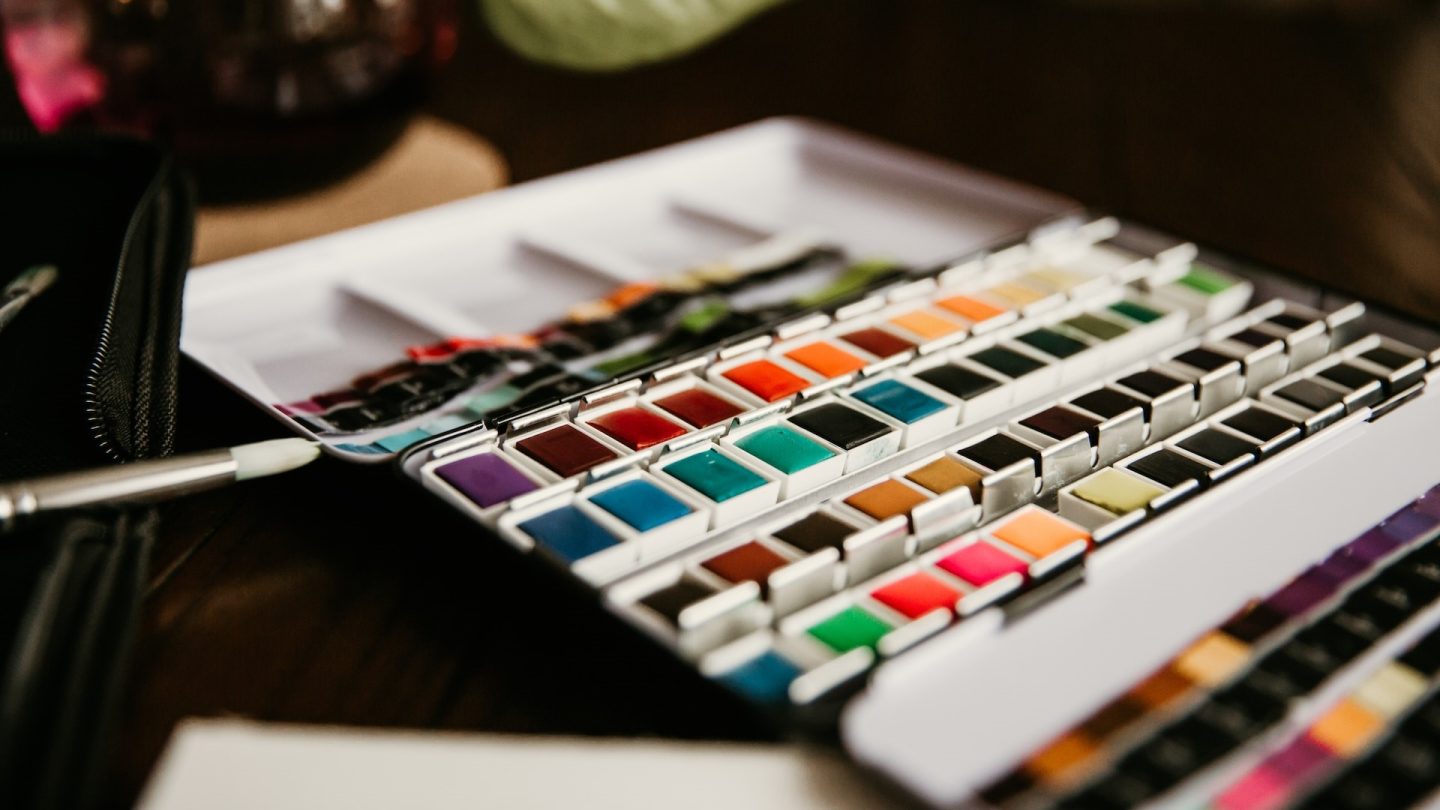
A good watercolor paint should do more than look vibrant in the pan. It needs to react quickly to water, mix without turning muddy, give you enough control over washes and still let the character of each pigment come through on paper.
For this comparison, we focused on how each paint behaved in actual use rather than simply comparing the number of colors in the box. We looked at how easily the paints reactivated, pigment strength, mixing, transparency, lifting, granulation and how practical each set was to work with. After testing five very different options, Winsor & Newton Cotman stood out as the easiest set to recommend overall, while Schmincke HORADAM delivered the strongest premium performance.
Tested and written by Amanda Westberg
Translated by Lucía Bima
Winsor & Newton Cotman Watercolour Studio Set — Best watercolor paints overall
Colors: 45 half pans Grade: Student Format: Half pans

Winsor & Newton Cotman won our comparison because it offers the best balance of color selection, predictable handling and accessibility. It isn’t the most heavily pigmented paint here, nor does it react as instantly as Schmincke, but it was consistently easy to work with once the pans were properly activated.
We found that some of the dry pans needed a little water before they really came alive. Running a wet brush across them immediately produced fairly light color, but leaving a few drops of water on the surface first made a noticeable difference. Once softened, the paint moved smoothly across the paper and mixed without giving us the chalky look we sometimes see from cheaper student watercolors.
Cotman was also relatively forgiving when we wanted to lift color or soften an edge. That makes the set particularly approachable if you’re still developing your technique. The 45-pan format is generous, perhaps even more generous than necessary, and there are duplicated colors we would happily trade for a smaller and more focused palette. Still, as a set that can take you from first experiments to much more confident paintings, it’s the strongest all-rounder here.
Pros
Easy and predictable to work with
Good mixing performance
Color can be lifted relatively easily
Large selection of colors
Cons
Some pans need pre-wetting before releasing much pigment
45 colors are more than most beginners really need
Schmincke HORADAM Aquarell — Best premium watercolor paints
Grade: Artist Format: Pans and tubes Range: Extensive professional color range

Schmincke HORADAM immediately felt like a step up in refinement. The biggest difference in our test wasn’t simply stronger color. It was how quickly and consistently the paint responded every time we came back to it.
We let tube paint dry in the palette before reusing it, and HORADAM reactivated with very little effort. A wet brush picked up concentrated color quickly, which made building washes noticeably easier than with Cotman. Mixing was equally convincing: colors remained clean instead of becoming dull too quickly, and it was easy to control how saturated we wanted a wash to be.
The range also becomes much more interesting if you enjoy pigment behavior itself. Some HORADAM colors produce pronounced granulation and separation, giving washes texture without us having to force the effect. Not every pigment behaves the same way, though, and that’s part of the point with a professional range. The biggest drawback is value. The improvement over a good student paint is obvious, but the difference becomes less dramatic when compared with other artist-grade ranges.
Pros
Excellent reactivation after drying
Strong pigment concentration
Clean and predictable mixing
Excellent selection of granulating pigments
Cons
Premium positioning is difficult to justify for beginners
Performance varies depending on the individual pigment
Van Gogh Watercolour Pocket Box — Best watercolor paints for beginners
Colors: Varies by set Grade: Student Format: Half pans

The Van Gogh Pocket Box was the easiest set in our test to pick up and simply start painting with. Where Cotman benefited from a short pre-wet, the Van Gogh pans reacted quickly to a damp brush and gave us usable color almost immediately.
The paint has a slightly creamy feel when activated and we found it easy to build an even wash without fighting against dry pans. That matters more than it may sound when you’re learning watercolor. If every brushload requires effort just to collect enough pigment, practicing gradients, wet-on-wet work and color mixing becomes unnecessarily frustrating.
Its limitations become clearer beside artist-grade paints. Schmincke and Daniel Smith both gave us noticeably more pigment from a small amount of paint, while Van Gogh needed additional layers when we wanted very saturated color. But that never made the Pocket Box feel inadequate for normal painting. The compact palette, responsive pans and manageable selection of colors make it the set we’d recommend first to someone learning watercolor.
Pros
Pans react quickly to water
Smooth, creamy handling
Easy to create consistent washes
Compact and practical palette
Cons
Lower pigment concentration than artist-grade paints
Deep saturated washes may require additional layers
Daniel Smith Extra Fine Essentials — Best watercolor paints for color mixing
Colors: 6 Grade: Artist Format: 5 ml tubes

Daniel Smith takes almost the opposite approach to the large Cotman set. The Essentials collection gives you only six colors, divided into warm and cool versions of the three primary colors. That sounds restrictive until you actually start mixing them.
The first thing we noticed was just how little paint we needed. Daniel Smith is highly concentrated, and squeezing out the same amount we would normally use with cheaper tube paint quickly became wasteful. Even a small amount produced strong color, and one pigment could easily overpower another if we weren’t careful.
That sensitivity makes the Essentials set particularly rewarding for mixing. Having warm and cool primaries gave us much more control over the secondary colors we created, from cleaner greens to more muted purples and oranges. It also forces you to understand why a mixture behaves the way it does instead of simply reaching for another premixed color.
We wouldn’t make it our first recommendation for someone who wants a simple watercolor set. Six tubes demand more mixing and the high pigment load makes proportions less forgiving. But if you want to learn color theory or build a compact professional palette, this was easily the most interesting set in the test.
Pros
Very high pigment concentration
Six colors can create a surprisingly broad palette
Excellent for learning and controlling color mixtures
Small tubes last longer than expected
Cons
Steeper learning curve
Easy to use too much paint at first
Less convenient than a larger ready-made palette
Holbein Artists’ Watercolor — Best watercolor paints for control
Grade: Artist Format: Tubes and selected pans Range: 108 colors

Holbein stood out for a completely different reason. While some watercolor paints seem eager to spread as soon as they touch wet paper, Holbein gave us noticeably more control over where the pigment moved.
That was particularly clear during wet-on-wet tests. The paint still flowed and produced soft transitions, but it didn’t race across the wet surface as aggressively as some of the other artist-grade paints. For detailed work or areas where we wanted a wash to remain within a loose boundary, that behavior was genuinely useful.
The colors themselves were clean and saturated, and dried paint reactivated well when we returned to the palette. We also found several colors relatively easy to lift when correcting an area or softening an edge. On the other hand, Holbein wouldn’t be our first choice for dramatic texture. Compared with Schmincke and Daniel Smith, the range gives you fewer obvious granulating effects and generally feels calmer on the paper.
That controlled character is exactly why it earns a place here. Painters who enjoy expressive blooms and heavy granulation may prefer another range, but for illustration, controlled washes and cleaner shapes, Holbein was one of our favorites.
If illustration is your main focus and you want something more precise than watercolor for linework and solid color, we’ve also tested the best illustration markers for drawing, sketching and detailed creative work.
Pros
Excellent control in wet-on-wet work
Clean, saturated colors
Good reactivation
Useful for detailed painting and controlled washes
Cons
Less exciting if you want strong granulation
More restrained flow won’t suit every painting style
How we tested the best watercolor paints
We compared these watercolor paints on watercolor paper using both wet-on-dry and wet-on-wet techniques. Rather than judging them by how many colors were included, we focused on the things that affected painting most.
Reactivation was one of the clearest differences. We checked how quickly dry pans and dried tube paint released useful amounts of pigment when touched with a wet brush. We also compared how much paint was needed to create saturated washes and whether additional layers remained transparent or started to look dull.
For mixing, we combined colors directly on the palette and on wet paper to see how cleanly they interacted. We also tested lifting by wetting dried areas and removing color with a clean brush. Finally, we paid attention to granulation, edge control and how predictable each paint felt when working wet-on-wet.
The result isn’t simply a ranking from strongest to weakest. These paints behave differently enough that the best choice depends heavily on how you like to paint.
What to look for when choosing watercolor paints
Student vs artist-grade watercolor
Student paints use less expensive pigments or pigment combinations to keep the cost lower. That doesn’t automatically make them bad. Both Cotman and Van Gogh performed well in our test and are easier to recommend to someone still learning how watercolor behaves.
For beginners, we wouldn’t consider artist-grade paint essential. Better paper often makes a bigger difference to the experience than moving immediately from a good student paint to an expensive professional range. If you’re still building your setup, see our guide to the best watercolor paper before spending everything on paint.
Pans or tubes?
Pans are cleaner, compact and convenient. You can open the palette, add water and start painting, which is why both Cotman and Van Gogh work so well as everyday sets.
Tubes make more sense when you regularly need larger quantities of concentrated paint. They also allow you to fill your own palette and let the paint dry for later use. Good artist-grade paints such as Schmincke and Holbein reactivated very well after drying in our tests.
Daniel Smith’s Essentials set demonstrates the other advantage of tubes: a very small amount of concentrated paint can cover a surprisingly large area.
Do you really need 24, 36 or 48 colors?
Probably not.
A large palette is convenient because many colors are ready to use, but it doesn’t necessarily make painting easier. Working with fewer colors teaches you how pigments interact and makes it easier to maintain harmony across a painting.
Daniel Smith’s six-color set was the most extreme example in our test, yet it could create a huge range of mixtures. For a beginner, somewhere around 10 to 12 well-chosen colors is usually enough to learn without feeling unnecessarily restricted.
Which watercolor paints should you buy?
For most people, Winsor & Newton Cotman is our top recommendation. It doesn’t have the pigment strength of the professional paints in this comparison, but its predictable handling, broad color selection and forgiving behavior make it the easiest set to live with.
If you’re ready to move into professional watercolor, Schmincke HORADAM delivered the most polished overall experience, particularly when it came to reactivation and mixing. Daniel Smith Essentials is the stronger choice if you actively want to learn color mixing, while Holbein makes more sense for painters who value control.
For complete beginners, however, we’d choose Van Gogh’s Pocket Box. Its responsive pans remove one of the small frustrations that can make watercolor harder to learn than it needs to be, and its compact palette gives you enough colors to experiment without becoming overwhelming.
